Where practical meets curated.
Bangrak Beach does not try to compete with the island’s more famous stretches of sand. It does not need to.
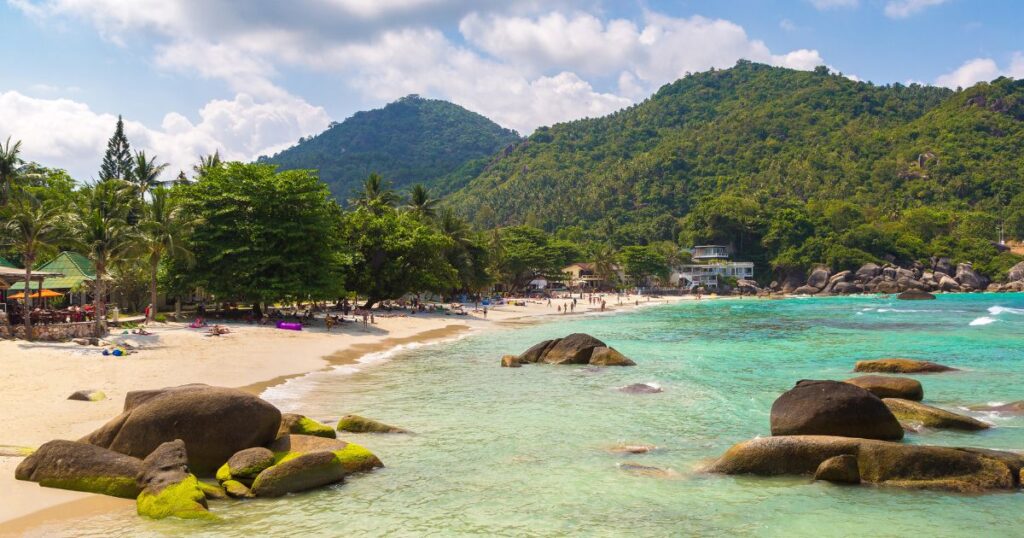
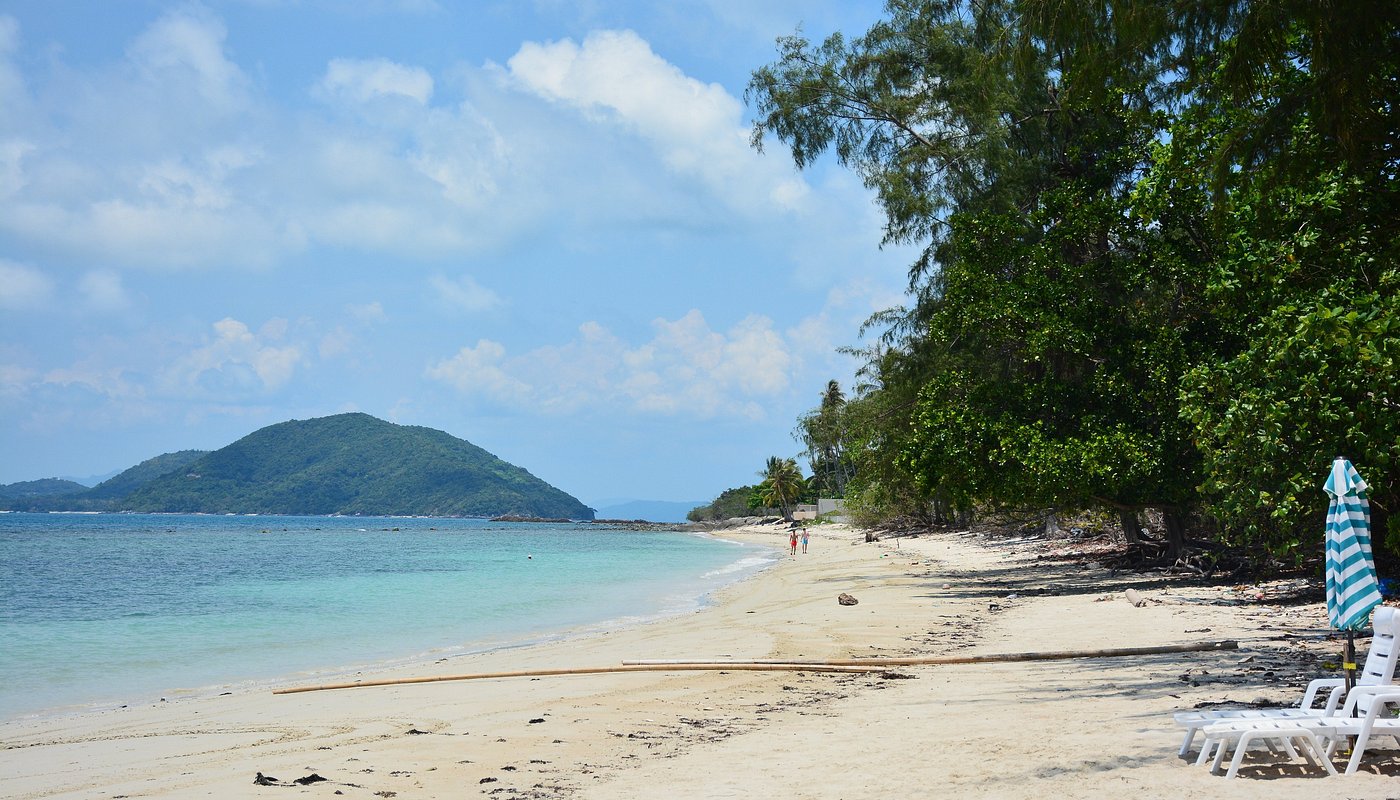
Set along Koh Samui’s north coast, Bangrak Beach is defined less by spectacle and more by access. The water is generally calm, the shoreline is easy to navigate, and the location places you within minutes of the airport, Fisherman’s Village, and some of the island’s more considered beachfront venues.
It suits travelers who value convenience without sacrificing atmosphere. You can spend the morning quietly by the water, step away during peak heat, and return in the late afternoon when the beach shifts into its second rhythm.
Where Bangrak Beach Sits on the Island
Bangrak Beach stretches for roughly four kilometres along Koh Samui’s north coast, positioned between the Big Buddha area and Bophut. It faces north toward Koh Phangan, which means the water is often calmer than the island’s east-facing beaches. The length of the shoreline means you can walk without immediately running into dense clusters of activity, which reinforces the area’s steady, open feel.
Its location is one of its quiet advantages.
The airport is less than fifteen minutes away. Fisherman’s Village is close enough for an easy evening transition. Chaweng is reachable without committing to a full cross-island drive. This stretch of coastline works as a practical base, especially for shorter stays or travelers who prefer access over isolation.
Bangrak Road runs parallel to the beach, which gives the area movement without overwhelming it. You are never far from what you need, yet the shoreline itself feels separate from the main traffic flow.
That balance is what defines Bangrak. It is connected, but not chaotic.
What Bangrak Beach Is Best For (and What It’s Not)
The value of Bangrak lies in how well it functions as a base, as a transition point, and as a stretch of coast that connects effortlessly to the rest of the north side of Samui island. When you understand what it does well, it becomes one of the most useful stretches of coastline on the island.
Here’s a few reasons why people from all over the world love it:
It Makes the Island Feel Smaller
Bangrak sits in a position that reduces friction.
The airport is close enough to remove arrival and departure stress. Fisherman’s Village is minutes away. Big Buddha is around the corner. Chaweng is reachable without committing to a long drive. That connectivity changes how you move through your stay.
You spend less time in transit and more time where you intend to be. For shorter trips especially, that efficiency compounds.
It Supports a Flexible Day
The shoreline is long and generally open, with north-facing water that is often calmer than the island’s east coast. Mornings feel steady. Midday heat is manageable if you plan around it. Late afternoon brings a natural shift in light and pace.
You can swim when conditions allow. You can walk without weaving through dense crowds. You can step off the sand for lunch and return without losing momentum.
Bangrak does not demand a rigid plan. It accommodates one.
It Transitions Cleanly Into Evening
This is where Bangrak separates itself.
Some beaches peak at midday and fade after sunset. Bangrak holds its value later. As the heat drops and the shoreline quiets, the focus shifts toward beachfront venues and the second half of the day.
Because of its positioning and layout, the move from beach time to drinks or dinner feels seamless. You are not relocating across the island. You are simply evolving the setting.
Used well, Bangrak is not just a daytime beach. It is the foundation of a well-structured evening.
It Filters for the Right Crowd
Bangrak does not attract heavy party traffic or high-density beach tourism. The atmosphere is generally measured, with a mix of long-stay visitors, couples, and travelers who prefer access over spectacle.
If you are looking for noise, constant activity, or dramatic scenery, other beaches may suit you better. But if you prefer balance, Bangrak quietly delivers.
How to Plan The Ideal Day at Bangrak Beach
Bangrak works best when you let the day unfold in stages rather than trying to fill every hour.
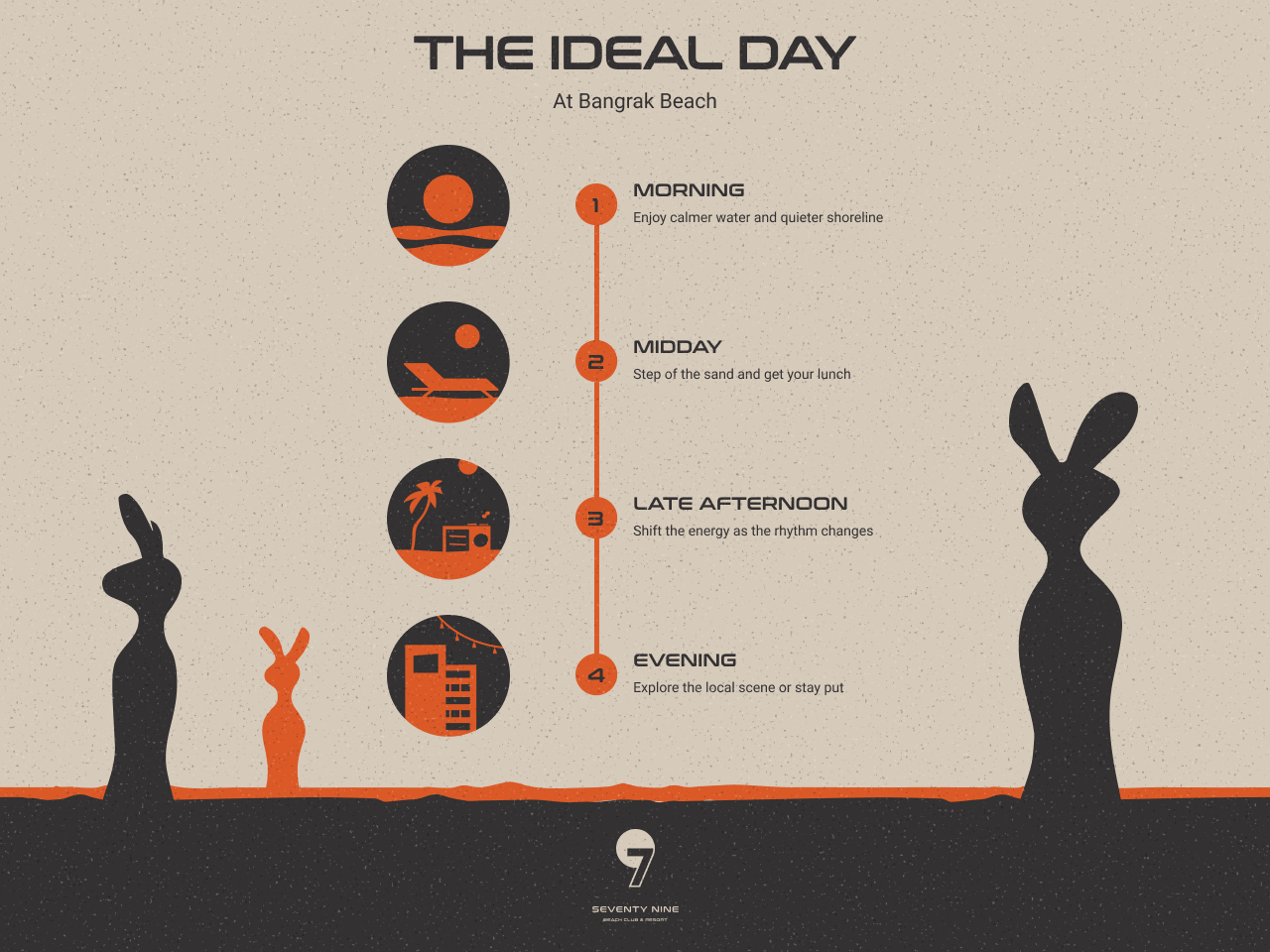
Morning: Start Quiet and Stay Close
Early hours tend to be the most settled. The water is often calmer, the shoreline is quieter, and the heat has not yet built. This is the time to swim if conditions allow, walk the length of the beach, or simply settle in with minimal structure.
If you prefer a short outing before the sun rises too high, Big Buddha Temple is only minutes away and easy to pair with a beach morning. The proximity makes it possible to add a cultural stop without committing to a full day of movement.
Midday: Step Back Rather and Relax
Midday heat on the north coast can be direct. Rather than forcing long beach hours, this is usually the moment to step off the sand.
Lunch along Bangrak Road or nearby in Bophut keeps things simple. Because everything is within short reach, you are never overextending yourself. The key is not to overplan.
Late Afternoon: Shift the Energy
This is when the area begins to show its advantage.
As the light softens, Bangrak transitions naturally from beach to venue. The shoreline becomes less about swimming and more about where you choose to position yourself for the evening.
79 Beach Club fits here seamlessly. Set directly on the beachfront, it operates as a refined second act rather than a separate destination. You move from sand to seating without relocating across the island. Drinks replace daylight. Music builds gradually. The view remains uninterrupted.
Because you began the day nearby, the transition feels effortless.
Evening: Explore or Stay Put
From there, the night can move in several directions.
Fisherman’s Village is a short drive if you want a walking street atmosphere. Chaweng is reachable if you prefer something more central. Or you can stay on Bangrak and let the evening remain contained.
That flexibility is what makes the area strong. The day does not feel fragmented because of the connected location.
Bangrak Checklist:
- Big Buddha Temple: Just minutes away, this landmark is ideal for an early morning visit before the heat builds. It adds a cultural stop without turning the day into an excursion.
- Wat Plai Laem: A visually striking temple complex nearby, known for its lake setting and intricate design. Easy to combine with Big Buddha in under an hour.
- Fisherman’s Village, Bophut: A short drive away, suitable for boutique browsing, waterfront dining, or the weekly walking street atmosphere. Close enough to visit without committing the entire evening.
- Airplane Spotting: Because of its proximity to the airport, occasional aircraft pass overhead. For some, this becomes part of the character of the area rather than a disruption.
- Bangrak Pier: Departure point for boats to Koh Phangan and surrounding islands. Particularly convenient if you are planning a short island hop.
- Local Cafés and Casual Dining Along Bangrak Road: Everyday convenience within walking distance. Practical for breakfast, coffee, or a simple midday meal between beach sessions.
- Chaweng (10–15 minutes by car): For a more central, high-energy atmosphere, shopping, or nightlife options when you want contrast.
Where to Stay on Bangrak Beach
Bangrak works best when you stay directly on the water.
79 Beach Club offers that position without compromise. Set on the beachfront, it combines accommodation and atmosphere in one location. You wake up steps from the sand, move through the day without relocating, and transition seamlessly into a more curated evening setting as the light changes.
Rather than using Bangrak as a convenient base and commuting elsewhere for quality, staying at 79 Beach Club Samui allows the beach itself to become the destination.
For a stay that feels cohesive from morning through evening, 79 Beach Club anchors the shoreline well.