Train hard, recover well, and experience Muay Thai in one of Thailand’s most iconic island destinations.
Beyond the beach clubs and sunsets, Koh Samui has built a strong reputation for Muay Thai. The island draws everyone from first-timers to experienced fighters, offering a range of gyms that reflect different styles, intensities, and training philosophies.
There’s no single “best” gym here on the island, only the one that matches how you want to train. Whether you're here for a focused fitness routine or a deeper dive into the sport, the choice of gym shapes the entire experience.
This guide is designed to help you navigate Koh Samui Muay Thai gyms; from choosing the right gym to understanding costs, schedules, and how to get started properly.
What is Muay Thai?
Muay Thai, often called the “Art of Eight Limbs,” is one of Thailand’s most respected cultural practices, combining strikes using fists, elbows, knees, and shins. Its origins date back several centuries, evolving from military combat techniques into a structured sport rooted in discipline, respect, and tradition.
A defining element of Muay Thai is the Wai Kru Ram Muay, a ceremonial ritual performed before fights to honor teachers and lineage. This reflects a broader aspect of Thai culture, where physical practice is closely tied to mindfulness and respect - values which are also seen in temple traditions and Buddhist practices across Thailand.
The Rise of Muay Thai Training
Today, Muay Thai has evolved beyond competition. It’s widely recognized as one of the most effective full-body workouts, improving cardiovascular endurance, strength, coordination, and mental focus.
Because of this, Koh Samui has become a destination not only for fighters, but also for wellness travellers, fitness-focused visitors, and those seeking a more intentional experience.
For many, training is just one part of the routine that is often paired with clean eating, recovery, and time spent exploring the island’s cultural side, from local temples to mindful spaces that reflect the same principles found in the sport.
What Training Muay Thai in Koh Samui Actually Feels Like
Most Muay Thai gyms in Koh Samui run two sessions per day, typically one in the morning and one in the afternoon. While each gym has its own style, the overall structure tends to follow a familiar flow.
Sessions usually begin with conditioning work: running, skipping, and mobility exercises designed to build endurance and prepare the body. From there, training moves into technique, including pad work with trainers, heavy bag drills, and shadowboxing to refine movement.
As the session progresses, you’ll often move into partner drills or controlled sparring, followed by clinch work, which is a key part of Muay Thai often overlooked by beginners. Many gyms finish with additional conditioning or strength work, depending on the focus of the session.
The pace can feel intense at first, but it’s structured in a way that allows you to build into it over time.
How Training Changes by Level: From Beginner to Fight Camp
Not all Muay Thai training in Koh Samui is the same and the right gym often depends on how far you want to take it.
- Beginners: The focus is usually on foundations and proper technique, with close guidance from trainers to ensure safe progression. Sessions are challenging, but designed to be approachable, even if you’ve never trained before.
- Intermediate trainees: Training tends to see a shift toward more structured pad work, increased clinch practice, and controlled sparring. At this level, training becomes more technical, with an emphasis on refining timing, balance, and combinations.
- Advanced: For those entering fighter-focused camps, the approach is more disciplined and demanding. Training volume increases, sparring becomes more regular, and there’s a stronger focus on performance, recovery, and consistency; especially for those preparing for fights.
How to Choose The Right Muay Thai Gym
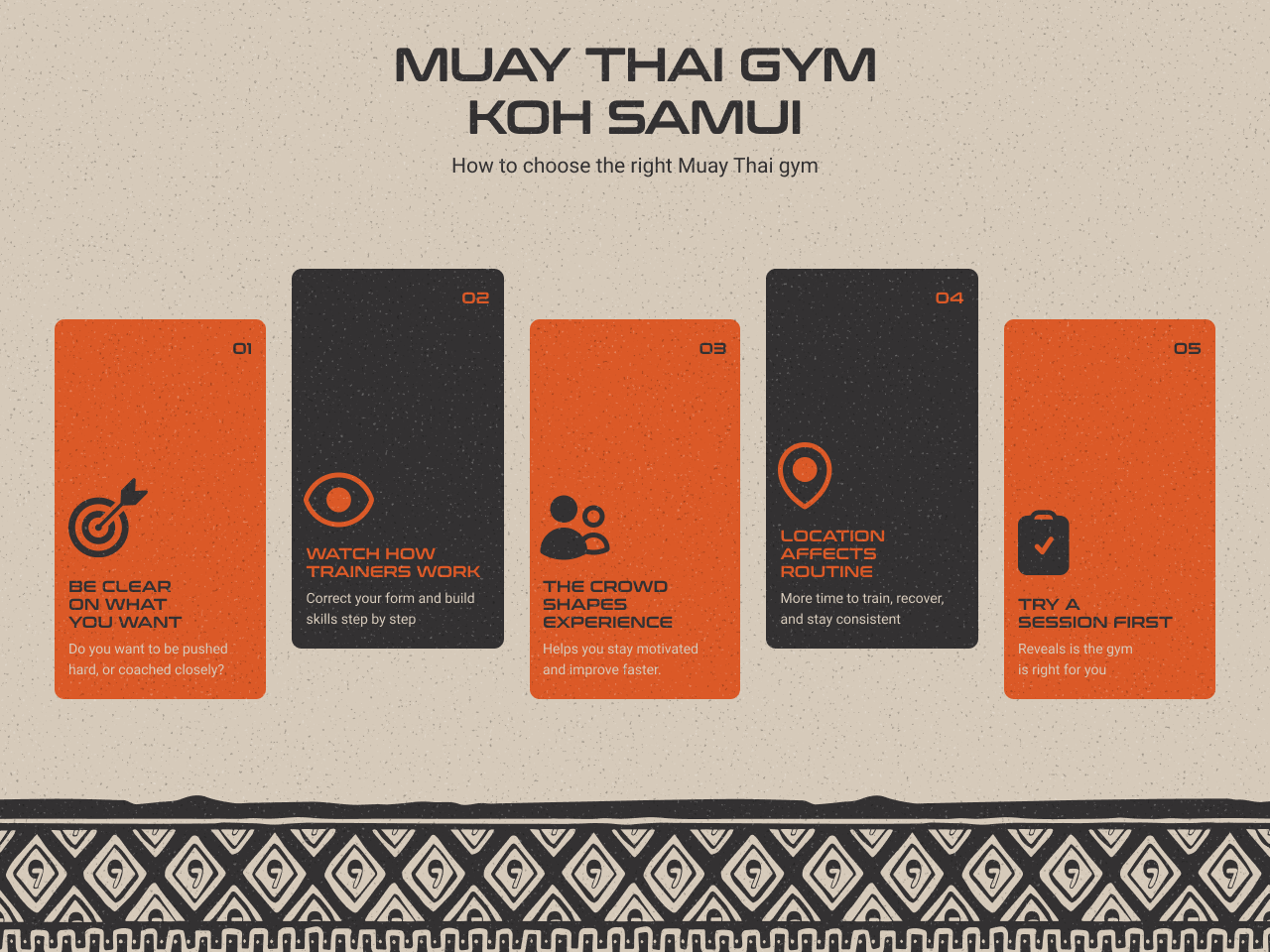
Most people come to Koh Samui thinking they’ll just “pick a gym when they arrive.” What they don’t realise is how different the experience can feel depending on where you train. Here’s our best tips on how to choose the right gym for you:
- Be Clear on What You Want — Or You’ll End Up in the Wrong Gym
The biggest mistake beginners make is choosing a gym based on reputation alone.
Some of the most well-known gyms are:
- Busy, high-volume, and fast-paced
- Great for experienced trainees
- Less focused on individual attention
If you’re new, this can feel overwhelming and you might spend most of the session just trying to keep up.
On the other hand, smaller or more balanced gyms tend to:
- Offer more correction during pad work
- Let you build technique properly
- Feel more structured and supportive
The key question is: Do you want to be pushed hard, or coached closely?
- Pay Attention to How Trainers Work — Not Just the Facility
Photos of gyms don’t tell you much. What matters is how trainers actually engage during sessions.
In a good gym, you’ll notice:
- Trainers actively correcting your form
- Pad sessions that feel tailored, not rushed
- Clear progression from basics to combinations
In others, sessions can feel more repetitive — especially if there are too many students per trainer.
A quick test: after one session, do you feel like you learned something or just got tired?
- The Crowd Shapes the Experience More Than You Think
Every gym has a different mix of people, and it directly affects the atmosphere.
- Some are filled with short-term travellers
- Some attract long-stay trainees and fighters
- Others sit somewhere in between
If you’re staying for more than a few days, this matters. Training alongside people who are consistent and focused often pushes you further than the session itself.
- Location Isn’t Just Convenience — It Affects Your Routine
Training twice a day sounds great in theory, until you factor in heat, travel time, and recovery.
That’s why many people choose areas where everything is close:
- Gym
- Food
- Recovery (massage, rest, beach)
Areas like Bangrak Beach are becoming more popular for this reason, offering a more balanced pace compared to busier parts of the island. It’s also where places like 79 Beach Club & Resort stand out, combining a central location with easy access to nearby gyms, the airport, and ferry connections.
Being based here makes it easier to build a routine: train, recover, eat well, and repeat without overcomplicating your day.
- Always Try a Session First
Even if you’ve researched everything, the real test is simple: Do one session before committing.
That one session will tell you:
- If the pacing suits you
- If the coaching style works
- If you actually enjoy being there
Because in the end, the “right” Muay Thai gym in Koh Samui isn’t the most famous one but it’s the one you’ll actually want to come back to the next day.
Top 5 Muay Thai Gyms in Koh Samui: A Quick Comparison
There’s no shortage of Muay Thai gyms in Koh Samui, but the differences between them are more about training style, environment, and intent than “which is best.”
The gyms below are well-known on the island, but what matters is how each one fits your pace, experience level, and goals. Schedules, trainers, and class structures can change, so it’s always worth checking current timetables, reviews, and availability before booking.
- Lionheart Muay Thai (Mae Nam)
A foreign-owned gym founded by Irish fighter Tony Olin, Lionheart blends authentic Muay Thai training with a lifestyle-focused fitness retreat experience. It’s especially known for its strong community vibe, beachfront accommodation, and balance between serious training and relaxed island living.
Best for:
- All levels (beginners to experienced)
- Muay Thai + fitness retreat combo
- Beach lifestyle experience
Highlights:
- Beachside villas + onsite pool
- Onsite café & restaurant
- Strong community atmosphere
- Top-level coaches
- Fitness retreat (FitKoh)
Training facilities:
- 2 rings
- Large matted area
- Bags + CrossFit rigs
- S&C zone
Training offered:
- Muay Thai
- Fitness / conditioning
- Lamai Muay Thai Camp (Lamai)
One of the oldest gyms on the island (25+ years), Lamai is a WMC-certified camp with deep roots in traditional Muay Thai. Led by British coach Ralph Beale, it has built a reputation as a go-to gym for both beginners and professional fighters.
Best for:
- Traditional Muay Thai
- Fighters + beginners
- Structured training routine
Highlights:
- WMC certified
- Long-established reputation
- Close to Lamai Stadium
- Twice-daily sessions
Training facilities:
- 2 rings
- Large matted space
- Bags
- Small S&C area
Training offered:
- Muay Thai
- Private sessions
- Superpro Samui (Chaweng)
A large Dutch-owned facility, Superpro is one of the most complete training complexes in Thailand, offering far more than just Muay Thai. Known for hosting international fighters and promotions, it’s a high-performance environment with a strong focus on cross-training.
Best for:
- MMA/BJJ + Muay Thai
- Serious athletes
- Variety seekers
Highlights:
- Ice baths & breathwork
- MMA cage
- Pool + yoga studio
- Huge class schedule
Training facilities:
- 400 sqm mats
- Ring + MMA cage
- Pool
- Yoga + recovery areas
Training offered:
- Muay Thai
- BJJ
- MMA
- CrossFit
- Yoga
- Breathwork
- Yodyut Muay Thai (North-East Samui)
A lesser-known but highly respected gym, Yodyut is considered a hidden gem with a strong reputation among serious fighters. With frequent visits from international coaches and athletes, it offers a more authentic and less touristy training environment.
Best for:
- Serious training
- Less touristy experience
- Intermediate/advanced
Highlights:
- Hidden gem feel
- 11 experienced coaches
- Outdoor conditioning
- Strong fighter presence
Training facilities:
- Multiple rings
- Large mat space
- Bags
- Outdoor training area
Training offered:
- Muay Thai
- BJJ
- S&C
- Punch It Muay Thai Gym (Lamai)
Originally a Swiss brand, Punch It brings a modern, well-structured approach to Muay Thai training in Koh Samui. It’s especially popular with international visitors and stands out for its clean facilities, organized sessions, and beginner-friendly environment.
Best for:
- Beginners to intermediate
- Families & kids
- Modern gym experience
Highlights:
- Ice baths & breathwork
- Kids training area
- Modern design
- Strong international crowd
Training facilities:
- Large mat space
- Ring
- Kids zone
- Bag wall
- S&C area
Training offered:
- Muay Thai (all levels)
- Kids classes
- Breathwork
- Ice baths
- S&C
Quick Takeaways
Still struggling to choose? Here’s a quick breakdown:
- Best overall experience: Lionheart (lifestyle + solid training)
- Best for fighters: Lamai or Yodyut
- Most complete facility: Superpro
- Best for beginners: Punch It
- Most authentic/traditional feel: Lamai / Yodyut
Choosing the Right Base for Your Muay Thai Trip
No matter which gym you choose, one thing is guaranteed: Muay Thai in Koh Samui is intense.
Whether you’re here for a fight camp or just a few sessions to experience it, the heat, the volume, and the physicality will take it out of you. And while the gym is where the work gets done, what you do outside of it is just as important.
Recovery, downtime, and actually enjoying the island all play a big role in how good your overall experience is. That’s where spots like 79 Beach Club come in.
Stay at 79 Beach Club Samui
A place to switch off after sessions, refuel properly, and spend time by the beach without overcomplicating things. Whether it’s a post-training meal, a chilled afternoon, or just a break from the routine, having somewhere like this nearby makes the whole trip feel more balanced.
Because the best Muay Thai trips aren’t just about how hard you train, but how well you recover and enjoy everything around it.
[Homepage]