.jpg)
Wat Phra Yai is more than a landmark on a checklist. It’s one of Koh Samui’s most important cultural sites, offering wide coastal views, an active temple setting, and a quieter side of the island that many visitors overlook.
Morning at Big Buddha Temple Koh Samui moves at a different pace. The sea breeze carries across the causeway, incense lingers in the air, and the steps leading to the golden statue feel calm before the island fully wakes.
With the right timing and a little awareness, the experience feels meaningful rather than rushed. This guide covers what to wear, when to go, expected costs, and how to approach the temple respectfully; especially if you’re planning your stay nearby on Bangrak Beach, where places like 79 Beach Club make it easy to balance cultural mornings with relaxed afternoons by the water.
What Is Wat Phra Yai (Big Buddha Temple)
In Thailand, temples are not monuments. They are living spaces. Known as wats, they function as places of worship, community gathering points, and spiritual anchors within towns and cities. Visitors are welcome, but they are stepping into an active religious environment rather than a historical attraction.
The name Wat Phra Yai translates directly to “Temple of the Big Buddha.” It is both literal and symbolic. The 12-meter golden seated Buddha that crowns the hill represents the Buddha in a state of calm and purity, a posture associated with steadfastness and protection.
Where is Wat Phra Yai Located in Samui?
Wat Phra Yai sits on a small rocky islet just off the northeast coast of Koh Samui, connected to the mainland by a short causeway near Bangrak Beach. From the road, the golden statue is visible long before you reach it, rising above the coastline against the open sky. Its proximity to Bangrak makes it one of the most accessible cultural sites on the island, particularly for visitors staying along the north coast.
The temple itself is surrounded by water on three sides, allowing it to carry a sense of separation from the pace of the island below. At the temple you’ll experience the sea breeze moving across the platform, boats passing quietly in the distance, and the atmosphere of calm and incense before the day fully begins.
The History of Wat Phra Yai
Wat Phra Yai was constructed in 1972, during a period when Koh Samui was still far removed from the international tourism it sees today. The 12-meter golden Buddha was built as a spiritual landmark and remains one of the island’s most significant religious symbols.
For local residents, the statue represents protection and prosperity. Over the decades, the temple has remained active as a place of worship, even as development expanded around it. While visitors come for the view and the scale, for the local community it continues to function as a working temple rather than a preserved monument.
Its longevity gives it weight. This is not a newly staged attraction. It has been part of the island’s spiritual landscape for over fifty years.
The Architecture of Big Buddha Temple
Wat Phra Yai is visually simple at first glance, but its details are layered with symbolism and intention.
- The Seated Golden Buddha: The 12-meter statue sits in the Mara posture, symbolizing steadfastness and enlightenment. Its bright gold finish stands in sharp contrast to the sky, giving it a commanding presence from nearly every angle.
- The Naga-Lined Staircase: The staircase leading upward is flanked by naga serpents, mythological guardians in Thai Buddhist tradition. Their curved forms guide visitors gradually toward the main platform, marking the transition from ground level to sacred space.
- Terrace Shrines and Offering Areas: Around the base of the statue, smaller shrines and prayer spaces create layers of activity. Incense, flowers, and quiet rituals unfold throughout the day, reinforcing that this is a working temple rather than a static monument.
- Rows of Temple Bells: Bells line parts of the upper terrace. Visitors often ring them gently as they pass, a symbolic act meant to carry intention and mindfulness forward.
- Open Coastal Design: Unlike the ornate, densely decorated temples of Bangkok, Wat Phra Yai feels open and exposed. Elevated above the sea and surrounded by sky, the structure integrates naturally into its coastal setting. The simplicity is deliberate, allowing the scale and symbolism of the Buddha to take focus.
Visiting Big Buddha Temple Respectfully: What to Wear and How to Behave
Wat Phra Yai is welcoming to visitors, but it remains a functioning Buddhist temple. In Thailand, temples are not staged attractions. They are active spiritual spaces woven into daily life. A thoughtful approach reflects well on you as much as it honors the setting.
Here are a few principles you should keep in mind when visiting:
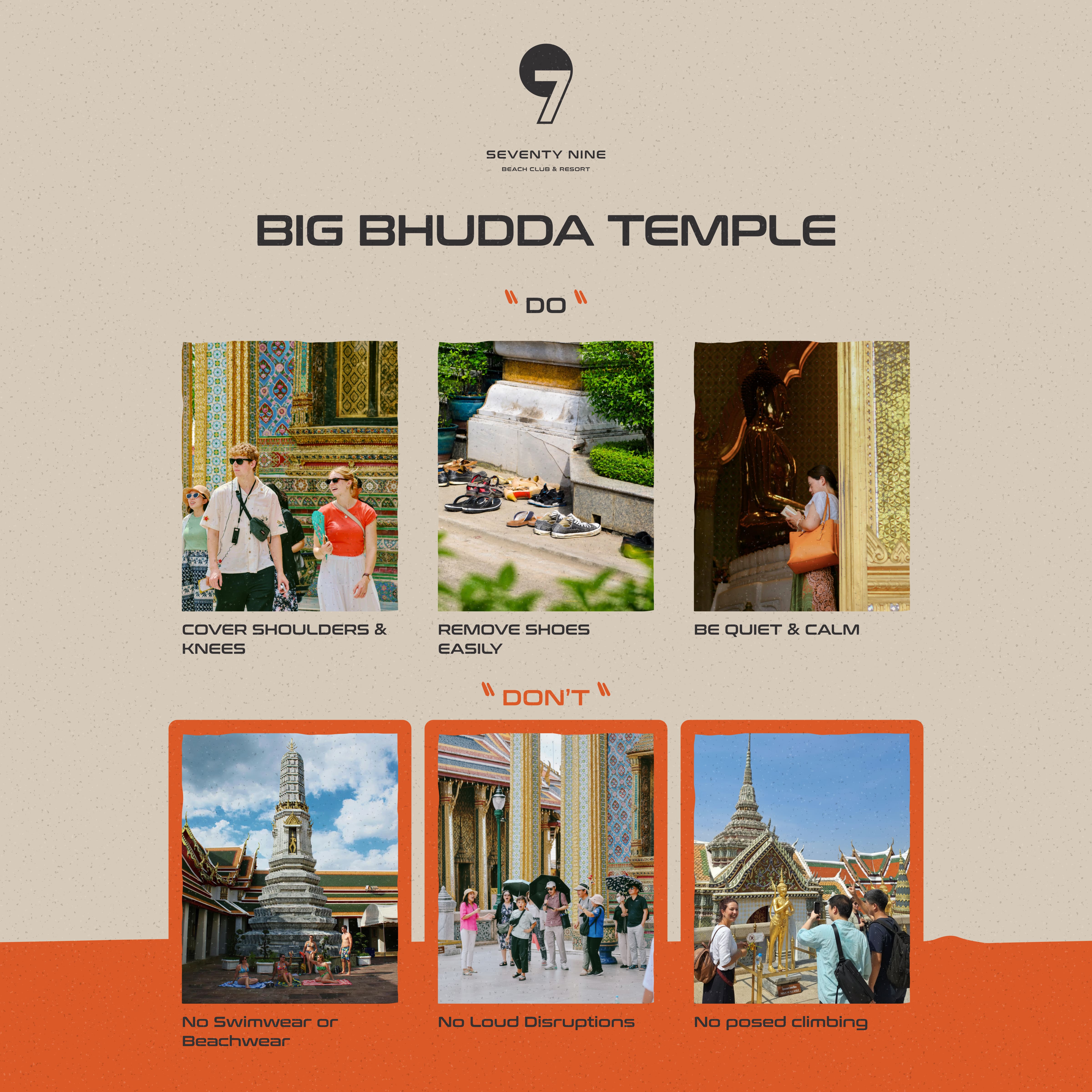
- Cover Shoulders and Knees: Both men and women should keep shoulders and knees covered. Lightweight trousers, long skirts, or loose shirts work well in the heat. If you’re coming directly from the beach, bring a scarf, cover-up, or light layer rather than relying on minimal adjustments at the entrance.
- Remove Shoes Where Required: Shoes must be removed before stepping onto certain elevated platforms and shrine areas. Choose footwear that’s easy to take on and off. Walking barefoot briefly is part of the temple experience.
- Keep Behavior Calm and Attentive: Speak at a moderate volume. Avoid climbing on structures or leaning casually against sacred areas for photos. If locals are praying, give them space. This is not a staged attraction. It is an active place of worship.
- Prepare for Heat and Exposure: The upper platform is open and receives direct sun. Bring water, especially in the late morning or afternoon. Sunglasses and breathable fabrics make the visit more comfortable without compromising modesty.
- Understand the Tone of the Space: Photography is welcome, but theatrics are not. There’s no need for exaggerated poses or loud group shots. Move slowly, observe first, and treat the visit as a cultural experience rather than a quick viewpoint stop.
With these basics in mind, visiting Big Buddha Temple Koh Samui is straightforward. Dress appropriately, move deliberately, and allow the temple to remain what it is: a place of worship first, a viewpoint second.
How We Recommend Timing Your Visit to Wat Phra Yai
Wat Phra Yai is open throughout the day, but the atmosphere shifts noticeably depending on when you arrive. A small adjustment in timing can change the entire tone of your visit.
Here’s how we recommend planning your visit:
Early Morning: Quiet, Cooler, Clear
Shortly after sunrise, the temple feels at its most composed. The air is cooler, the light is softer, and the platform above the sea carries a natural calm.
This is the best time if you prefer space, slower pacing, and clearer photographs without heavy foot traffic. It also pairs naturally with a relaxed coastal morning afterward: coffee, breakfast, or a swim once the island warms up.
If you’re staying near Bangrak Beach, an early visit is effortless and sets the tone for the rest of the day.
Late Afternoon: Warmer Light, More Energy
Late afternoon brings stronger warmth and a livelier flow of visitors. The light turns warmer across the statue and sea, creating a golden backdrop that works beautifully in photos.
Expect more movement on the staircase and platform, especially in high season. If you visit at this hour, give yourself a little extra time so you’re not rushing between viewpoints.
This timing works well if you’re structuring the day around a slow morning and heading out later once the heat begins to ease.
Midday: It’s Manageable, But Very Hot
Midday visits are entirely possible, but the platform offers limited shade and the staircase absorbs heat. If this is your only window, bring water, wear breathable fabrics, and move at an unhurried pace.
Shorter stays work best during peak sun hours.
Here’s A Few Small Adjustments That Make It Better
From our experience, these details make the biggest difference:
- Arrive with water already in hand.
- Do one full walk around the terrace before stopping for photos.
- Pause at the edges for the sea views rather than heading straight to the center.
- Plan something restorative afterward, whether that’s lunch, the beach, or simply slowing down.
Wat Phra Yai is easy to visit. The key is pacing it in a way that complements the rest of your day rather than interrupting it.
How to Get To Big Buddha Temple Samui
- From Chaweng, the drive typically takes 15 to 20 minutes depending on traffic.
- From Lamai, allow closer to 30 minutes.
- From Mae Nam or Bangrak, you’re usually within 10 to 15 minutes.
Taxis and Grab are reliable and remove parking concerns. If you’re renting a scooter or car, aim for earlier in the day when parking is simpler and the platform less crowded.
For guests staying along Bangrak Beach, including at 79 Beach Club, the temple is just a short drive away. This proximity makes it easy to visit without building an entire day around transport.
A Half-Day Done Properly
The most enjoyable visits to Big Buddha Temple Koh Samui are rarely rushed or stacked between multiple attractions.
- Morning: Visit shortly after sunrise. The staircase feels calmer. The platform is open. Walk the full terrace before stopping for photos. Give yourself space to observe rather than move quickly.
- Late Morning: Return toward the coast. Coffee with a sea view or a short scenic drive along the north shore is enough. Avoid over-scheduling.
- Afternoon: Shift into rest mode. This is where location matters. Staying on Bangrak Beach allows you to move from temple steps to water without crossing the island. A relaxed lunch, poolside seating, or time on the sand keeps the day balanced.
For many visitors, this is why choosing the right base makes a difference. When you’re staying somewhere like 79 Beach Club, the temple visit feels integrated rather than logistical. You step out for culture in the morning and step back into comfort by early afternoon.
No long transfers. No backtracking across the island. Just a clean transition from perspective to ease.
Make the Day Feel Easy at 79 Beach Club Samui
Visiting Big Buddha Temple Koh Samui is simple with a little planning. Go early if you can. Dress appropriately. Bring water. Give yourself enough time so you’re not rushing up and down the steps.
After that, the best thing you can do is not overcomplicate the rest of the day.
If you’re staying on Bangrak Beach, everything is close. At 79 Beach Club, the temple is only a few minutes away, so you can head back for a proper lunch, a swim, or just time to relax without turning the visit into a full-day production.
If you’re planning your stay in Koh Samui, we’re always happy to help you shape days that feel balanced; a bit of culture, a bit of coast, and plenty of time to enjoy both.