The Mummified Monk of Wat Khunaram: History, Legacy & Visiting Today
Wat Khunaram is a respected Buddhist temple located in southern Koh Samui, near the Lamai and Hua Thanon area.
It is best known for housing the preserved body of Luang Pho Daeng, a revered monk whose mummified remains have become one of the island’s most talked-about cultural sights. While unusual to some visitors, the display is deeply rooted in Buddhist beliefs about impermanence and spiritual discipline.
This guide will help you understand what to expect when visiting Wat Khunaram, including the cultural significance of the mummified monk, proper etiquette, how to get there and where to park, as well as practical details like opening hours and any fees.
Who Was the Mummified Monk of Wat Khunaram?
The mummified monk at Wat Khunaram is Luang Pho Daeng, whose monastic name was Phra Kru Samathakittikhun. He remains one of Koh Samui's most respected Buddhist figures, remembered for his lifelong commitment to meditation, discipline, and serving the local community.
Early Life
Born on Koh Samui in 1894, Luang Pho Daeng entered monastic life as a young man, following a path that was common in Thailand. After several years as a monk, he left the monastery, married, and raised a family before eventually returning to the Buddhist order around the age of 50. It was during this second chapter of his life that he devoted himself fully to studying Buddhist teachings and practising meditation.
Leadership at Wat Khunaram
His dedication and leadership eventually led to his appointment as abbot of Wat Khunaram, where he became widely respected for both his spiritual guidance and his commitment to the local community. Throughout his later years, Luang Pho Daeng focused on teaching meditation and encouraging others to live according to Buddhist principles of mindfulness, compassion, and self-discipline.
Legacy and Cultural Significance
Today, visitors to Wat Khunaram come not only to see his remarkably preserved body but also to learn about the life and legacy of a monk whose teachings continue to inspire both local worshippers and travellers. Understanding who Luang Pho Daeng was helps place the famous display in its proper cultural and religious context, reminding visitors that the temple remains an active place of worship rather than simply a tourist attraction.
Why Is Luang Pho Daeng's Body Preserved?
Luang Pho Daeng passed away on 6 May 1973 at the age of 79 while meditating in the lotus position. According to those who knew him, he had spent many years preparing for his death through dedicated meditation and is believed to have died peacefully during his practice.
His Final Wishes
Before his passing, Luang Pho Daeng gave his followers clear instructions about what should happen to his body. He reportedly said that if his body showed signs of normal decomposition, it should be cremated in accordance with Buddhist tradition. However, if it remained naturally preserved, he wished for it to be displayed so that it could continue to remind future generations of the importance of living a virtuous life and following the teachings of the Buddha.
The Preservation of His Body
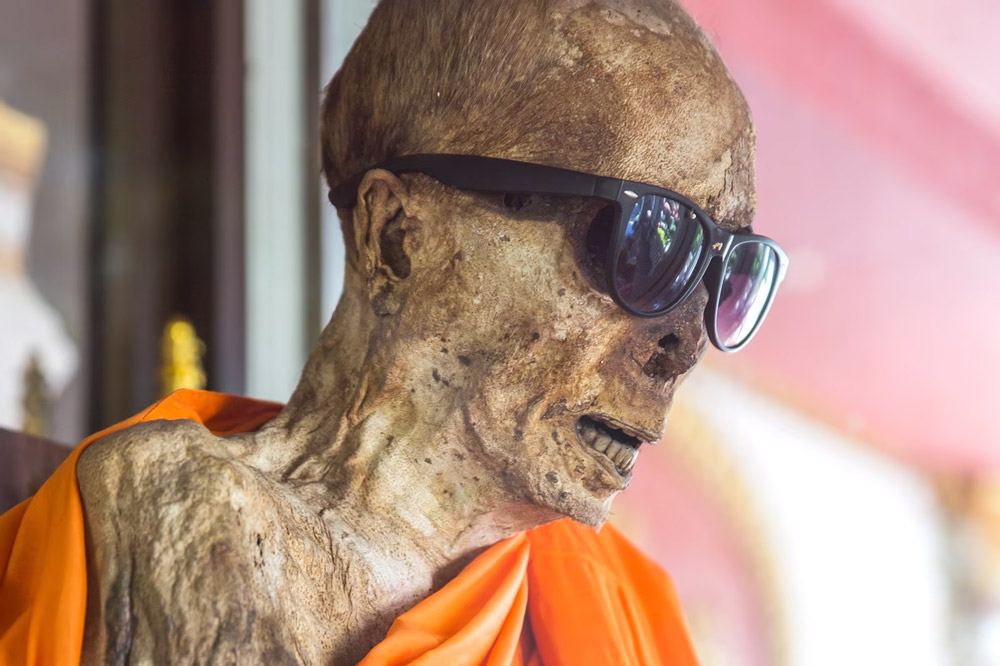
More than five decades later, Luang Pho Daeng's body remains on display inside a glass case at Wat Khunaram, where he is dressed in his saffron monastic robes and wears a pair of dark sunglasses. The sunglasses were added to cover his eye sockets as the soft tissue naturally deteriorated over time, allowing the display to remain respectful while preserving his appearance.
Cultural and Spiritual Significance
For many visitors, the sight of the mummified monk is unlike anything they have experienced before. While it may seem unusual from a Western perspective, it is regarded by many Thai Buddhists as a symbol of dedication, discipline, and the impermanence of life. Rather than being viewed as a curiosity, Luang Pho Daeng's preserved body serves as a reminder that life is temporary and that spiritual practice can leave a lasting legacy.
Today, Wat Khunaram continues to welcome both worshippers and visitors, who come not only to see the famous mummified monk but also to pay their respects and learn more about the Buddhist beliefs that give the display its enduring significance.
What to Expect When Visiting Wat Khunaram
Visiting Wat Khunaram is a peaceful and respectful experience. Although the temple is best known for the mummified monk, it remains an active place of worship where local residents come to pray, make merit, and take part in Buddhist ceremonies.
Quick Overview
The Mummified Monk
The main attraction is Luang Pho Daeng's preserved body, displayed upright inside a glass case within one of the temple buildings. Dressed in his saffron robes and wearing his distinctive sunglasses, the display is easy to find and accompanied by information about his life and legacy.
What you'll notice:
- Upright seated position inside a glass case
- Traditional saffron monk robes
- Sunglasses placed over the eyes
- Informational signage explaining his life
A Working Buddhist Temple
Beyond the famous display, you'll find traditional temple buildings, shrines, and merit-making areas where visitors can participate in local customs.
Things you can do:
- Offer flowers at shrines
- Light incense sticks
- Make a small donation
- Observe monks and locals during daily rituals
What to expect:
- A quiet and respectful environment
- Active religious practices
- Authentic local atmosphere
How Long to Spend
Most visitors spend 15 to 45 minutes exploring Wat Khunaram, though you may wish to stay longer depending on your interests.
Typical visit duration:
- Quick stop: 15–20 minutes
- Standard visit: 30–45 minutes
- Extended visit: 1 hour+ (for photography or deeper exploration)
Since the temple is located close to several other attractions in southern Koh Samui, it's easy to include as part of a half-day sightseeing trip.
Where Is Wat Khunaram?
Wat Khunaram is located in southern Koh Samui between Na Muang and Hua Thanon, just a short drive from Lamai Beach.
Nearby attractions include:
- Na Muang Waterfalls
- Wat Sila Ngu
- Guan Yu Shrine
- Hin Ta & Hin Yai Rocks
Its convenient location makes it a popular stop when exploring the island's south coast.
Visitor Information on Wat Khunaram
Planning ahead will help you make the most of your visit to Wat Khunaram. Here's everything you need to know before you go.
Opening Hours & Entrance Fee
Wat Khunaram is open daily from 6:00 AM to 6:00 PM, giving visitors plenty of time to explore throughout the day.
There is no official entrance fee, and visiting the mummified monk is completely free. However, donations are welcomed and help support the upkeep of the temple and its grounds.
If possible, plan your visit for early morning or late afternoon. These times are generally quieter, temperatures are more comfortable, and the softer light is ideal for photography.
How to Get to Wat Khunaram
Wat Khunaram is located on Route 4169 in southern Koh Samui, between Na Muang and Hua Thanon, approximately a 10-minute drive from Lamai Beach.
- By scooter or rental car: Hiring your own transport is the easiest and most flexible option. The temple has free parking for both scooters and cars.
- By taxi or private driver: Taxis are widely available across Koh Samui and are a convenient choice if you're visiting multiple attractions in the south of the island. Many private island tours also include Wat Khunaram as a stop.
- By songthaew: Koh Samui's shared pickup trucks (songthaews) travel along the island's main ring road and can stop near the temple. Be sure to agree on the fare before your journey begins.
Temple Etiquette
As Wat Khunaram is an active Buddhist temple, visitors are asked to behave respectfully throughout their visit.
Before entering the temple grounds:
- Wear clothing that covers your shoulders and knees.
- Speak quietly and be mindful of worshippers.
- Remove your shoes before entering temple buildings where required.
- Avoid blocking prayer areas or donation boxes.
- Photography is generally permitted, but check for any posted signs and avoid using flash or taking posed photos with the mummified monk.
Showing respect for local customs helps preserve the peaceful atmosphere and ensures everyone can enjoy their visit.
Facilities
Wat Khunaram offers a small parking area, public toilets, and a few stalls selling drinks, snacks, flowers, and souvenirs. While facilities are fairly basic, they're sufficient for a comfortable short visit and make the temple an easy stop during a day of exploring southern Koh Samui.
The Best Way to Continue Your Day Exploring Southern Koh Samui
A visit to Wat Khunaram fits easily into a wider day of exploring southern Koh Samui. Nearby attractions like Na Muang Waterfalls, Guan Yu Shrine, and Hin Ta & Hin Yai Rocks are all within a short drive, making it simple to combine culture, nature, and coastal views.
After a day of sightseeing, you can unwind by the sea. Just a short drive away, 79 Beach Club offers a relaxed beachfront setting for dinner, drinks, or sunset views.
Suggested Half-Day Itinerary
- 9:00 AM: Visit Wat Khunaram
- 10:00 AM: Explore nearby attractions
- 12:30 PM: Lunch around Lamai or Hua Thanon
- Afternoon: Beach time or local sights
- Sunset: Dinner or drinks at 79 Beach Club