.jpg)
If you want to understand Koh Samui, start where locals still go to pray.
Temples in Thailand aren’t museums or monuments. They’re part of everyday life. Weddings happen here, festivals begin here, and you’ll see kids play in the courtyards while monks sweep the grounds in the early morning heat. A Koh Samui temple visit isn’t about ticking off landmarks, but about seeing a part of the island that existed long before tourism arrived and still operates on its own terms today.
Some temples are dramatic and ornate, like the towering Big Buddha that watches over the coastline. Others are quiet neighborhood spaces where the most interesting moments happen when nothing much seems to be happening at all.
Together, they offer a different way to experience Samui. Slower. More local. And far more revealing than most itineraries ever show.
Why Every Town in Thailand Has a Temple
If you travel around Thailand long enough, you’ll notice something quickly. No matter how small the town is, there’s always a temple nearby.
In Thailand, temples, or also known as “wats”, are not just religious buildings. They function as community centers, cultural landmarks, and places where daily life quietly intersects with faith.
Temples serve many roles in Thai society:
- Places of worship: Thai Buddhism is deeply tied to daily life. People visit temples to pray, make merit, or leave offerings.
- Community gathering spaces: Festivals, ceremonies, and important life events often take place at the local temple.
- Centers of learning: Traditionally, temples were where education happened. Monks taught reading, writing, and Buddhist teachings.
- Cultural landmarks: Many temples showcase incredible Thai architecture, sculptures, and artwork that reflect centuries of craftsmanship.
For visitors, stepping into a Koh Samui temple offers a chance to see a living part of Thai culture that continues to shape everyday life across the country.
A Tour of Koh Samui’s Most Important Temples
Koh Samui is home to dozens of temples, each reflecting a different part of the island’s history and culture. These are places where daily life unfolds around prayer, ceremonies, and community gatherings. Together they offer a window into the spiritual and cultural traditions that continue to shape the island today.
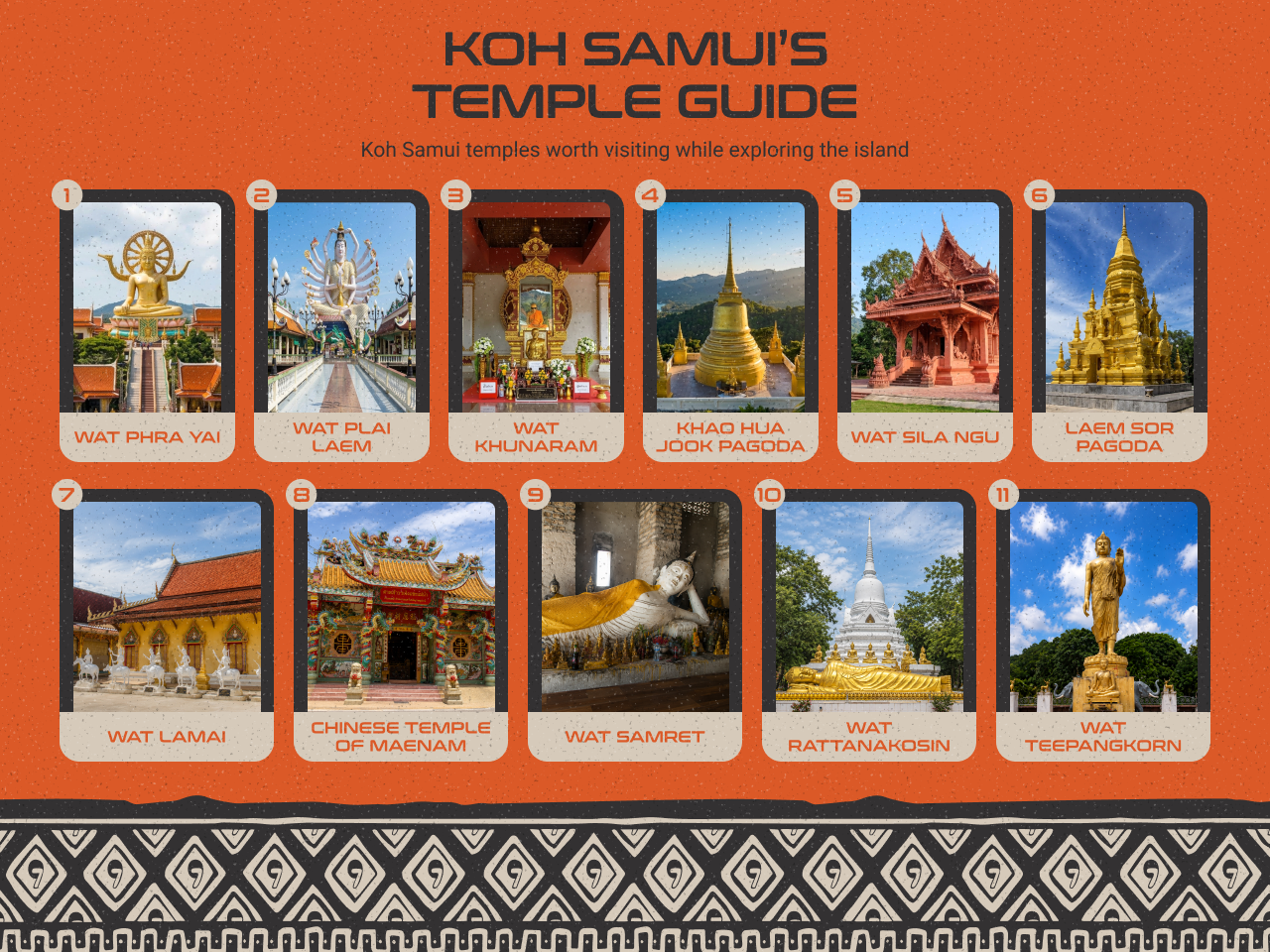
Here are some of the most notable Koh Samui temples worth visiting while exploring the island.
Wat Phra Yai (Big Buddha)
Wat Phra Yai is one of the most recognizable landmarks on the island. Located on a small islet connected to Koh Samui by a causeway, the temple is best known for its towering 12-meter golden Buddha statue, which can be seen from miles away.
Built in 1972, the statue represents the Buddha in a state of purity and enlightenment. Visitors climb a staircase flanked by decorative naga serpents, a common symbol in Thai Buddhist architecture, before reaching the platform where the statue sits overlooking the sea.
The temple is both a spiritual site and a viewpoint. Locals visit to pray and leave offerings, while visitors often stop for the sweeping views across the coastline.
Wat Plai Laem
Wat Plai Laem is one of the most visually striking temples in Koh Samui. Unlike many traditional Thai temples, it blends Thai and Chinese architectural influences, reflecting the island’s diverse cultural history.
The temple complex sits on a lake and features an enormous 18-armed statue of Guanyin, the Chinese Goddess of Mercy. The statue rises dramatically above the water, surrounded by colorful shrines and sculptures.
Visitors often walk the bridges around the lake and feed the fish below while taking in the intricate artwork that covers nearly every surface.
Wat Khunaram
Wat Khunaram is known for something unusual, the mummified monk Luang Pho Daeng, whose preserved body has been displayed at the temple since his death in 1973.
According to local belief, the monk predicted the day of his death and entered meditation before passing away peacefully. His body has shown remarkably little decomposition and remains seated in a glass case.
While it can feel surprising for first-time visitors, the display is considered a symbol of devotion and discipline in Buddhist practice.
Khao Hua Jook Pagoda
Perched on a hill above Chaweng, Khao Hua Jook Pagoda offers one of the best viewpoints on the island.
The golden pagoda sits on the site of what locals believe to be a Buddha footprint relic, making it both a spiritual and historical location. From the hilltop, visitors can see panoramic views of Chaweng Lake, the coastline, and planes landing at Samui Airport.
The quiet setting makes it one of the more peaceful temple visits on the island.
Wat Sila Ngu
Wat Sila Ngu is sometimes called the “Red Temple” because of its deep terracotta-colored buildings and intricate carvings.
Located near Lamai Beach, the temple stands out for its unusually detailed architecture. Many of the sculptures and decorations are carved directly into the red stone, giving the temple a distinctive look compared to the more gold-colored temples elsewhere.
The temple also sits close to the sea, creating a dramatic contrast between the red structures and the surrounding coastal landscape.
Laem Sor Pagoda
Laem Sor Pagoda is one of the most unique temples in Koh Samui because of its location directly beside the ocean.
Unlike many temples that sit inland or on hills, this golden pagoda rises from a quiet beach on the southern side of the island. The structure was built using yellow tiles that catch the sunlight and reflect against the water.
The peaceful atmosphere makes it feel far removed from the busier tourist areas of Samui.
Wat Lamai
Wat Lamai is a working temple located in the heart of Lamai town. While it may not be as visually dramatic as some of the island’s larger temples, it offers an authentic glimpse into everyday Thai religious life.
The temple grounds often host local festivals, ceremonies, and community events. Nearby, the Lamai Cultural Hall displays traditional artifacts that tell the story of the island’s past.
For visitors, Wat Lamai provides a quieter and more local temple experience.
Chinese Temple of Maenam
The Chinese Temple of Maenam reflects the strong influence of Chinese heritage on the island.
Located near Maenam’s walking street area, the temple features bright red architecture, elaborate lanterns, and traditional Chinese statues. It’s particularly lively during Chinese festivals such as Lunar New Year.
The temple offers a different cultural perspective compared to the island’s predominantly Thai Buddhist temples.
Wat Samret
Wat Samret is one of the oldest temples on Koh Samui, dating back several centuries.
The temple is known for its calm atmosphere and collection of ancient Buddha statues, some of which were discovered hidden inside the temple walls during restoration work.
Compared to more famous temples, Wat Samret sees fewer visitors, making it a peaceful place to explore.
Wat Teepangkorn
High in the hills of central Koh Samui sits Wat Teepangkorn, a temple famous for its line of golden Buddha statues stretching along the mountain road.
The temple offers some of the most impressive panoramic views on the island. On clear days, visitors can see across much of the coastline and surrounding jungle.
Because of its elevation and quieter location, the temple often feels calm and reflective compared to the busier coastal sites.
Wat Rattanakosin
Wat Rattanakosin is a lesser-known temple located near Nathon, the island’s main port town.
The temple features traditional Thai architecture and beautifully detailed murals that depict scenes from Buddhist teachings. Its peaceful setting and local atmosphere make it a good place to experience a temple visit away from the main tourist routes.
Visitors who stop here often find it to be one of the more relaxed and authentic temple experiences on Koh Samui.
Best Practices to Follow When Visiting Temples in Thailand
Temples in Thailand are open to visitors, but they are first and foremost places of worship. People come here to pray, meditate, and take part in daily religious rituals. A little awareness goes a long way in making sure your visit feels respectful rather than disruptive.
Here are a few simple practices to keep in mind when visiting a Koh Samui temple.
- Dress modestly: Shoulders and knees should be covered for both men and women. Lightweight clothing works well in the tropical heat, but avoid tank tops, very short shorts, or beachwear when entering temple grounds.
- Remove your shoes where required: Many temple buildings require visitors to remove their shoes before entering. Look for shoe racks near entrances or simply follow what locals are doing.
- Keep your voice low: Temples are calm spaces where people come to pray or reflect. Speak quietly and avoid loud conversations, music, or phone calls.
- Be mindful when taking photos: Photography is usually allowed in outdoor areas, but avoid interrupting people who are praying. Some interior spaces may restrict photos, so look for posted signs.
- Respect monks and religious objects: Monks are highly respected in Thai culture. Avoid touching them or handing objects directly to them, particularly if you are a woman. Statues and shrines should also be treated with care and never climbed on for photos.
- Point your feet away from Buddha statues: In Thai culture, feet are considered the lowest part of the body. When sitting near a Buddha statue, avoid pointing your feet directly toward it.
Explore Koh Samui’s Cultural Landmarks from 79 Beach Club
Many of Koh Samui’s most interesting temples are spread across the island, from hilltop pagodas with sweeping views to quiet neighborhood temples where daily life unfolds. Having the right base makes it much easier to explore them without turning the day into a long series of drives.
Located on Bangrak Beach, 79 Beach Club sits within easy reach of several of the island’s most well-known temples, including Wat Phra Yai (Big Buddha) and Wat Plai Laem, both just a short drive away. From here, guests can easily plan half-day cultural outings before returning to the coast to relax.
Our team is always happy to help with recommendations on which temples to visit, the best times to go, and how to structure a day that feels balanced rather than rushed.